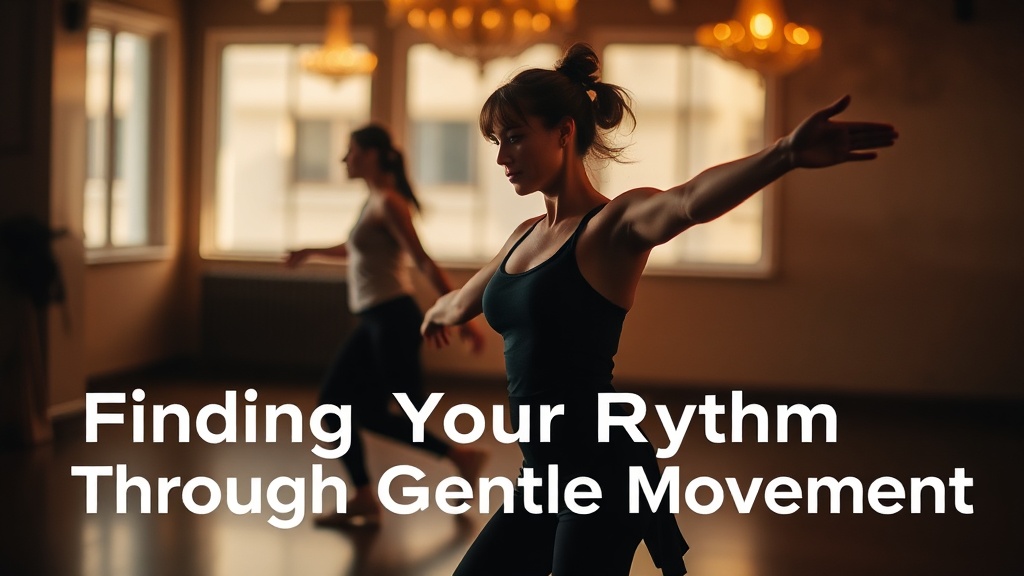
Finding Your Rhythm Through Gentle Movement

A person sits at a desk, staring at a screen, feeling a heavy, stagnant weight in their chest. They want to move, but the idea of a high-intensity gym session feels exhausting and impossible. They aren't looking for a sweat-drenched workout; they just want to feel less stuck. This post explores how gentle movement—like stretching, walking, or slow yoga—can help regulate your nervous system and reconnect you to your body when you feel disconnected or overwhelmed.
Movement isn't always about burning calories or hitting a personal record. Sometimes, it's about survival. When your mind is racing or, conversely, when you feel completely numb, your body often holds onto that tension in ways you don't realize. Moving gently helps signal to your brain that you are safe.
Why does movement help with mental health?
Gentle movement helps regulate the nervous system by shifting the body from a state of "fight or flight" into a state of "rest and digest."
When you're stuck in a loop of anxiety or even a depressive slump, your physical state often mirrors your mental state. If your mind is spinning, your body might feel tight or restless. If you're feeling low, your body might feel heavy and unmotivated. By introducing low-impact movement, you aren't forcing a change—you're offering a suggestion to your nervous system.
Physical activity can alter the chemical makeup of your brain. Even something as simple as a walk around the block can influence neurotransmitters. It’s not about a "runner's high"—that's a different beast entirely. This is about subtle shifts in blood flow and tension release. It's about moving the stagnant energy out of your limbs.
If you find that your thoughts are spinning too fast to control, you might find that physical sensation can pull you back to the present. Using sensory grounding to exit a mental loop can be a great companion to gentle movement, as it bridges the gap between your racing thoughts and your physical body.
Common types of gentle movement:
- Restorative Yoga: Using props like bolsters or blocks to support the body in stillness.
- Walking: A simple, rhythmic pace through a park or even around your living room.
- Tai Chi: Slow, deliberate movements that focus on breath and balance.
- Stretching: Targeted movements to release tension in the neck, shoulders, or hips.
How much movement do I need to feel a difference?
You only need about five to ten minutes of consistent, gentle movement to begin noticing a shift in your physical tension and mental clarity.
The mistake many people make is thinking they need a full hour of exercise to "count." That's not true. If you're having a particularly rough day, even three minutes of deep breathing while seated can be a win. The goal isn't intensity; it's consistency and awareness.
Think of it like this: you aren't trying to run a marathon. You're just trying to shake the dust off. On days when even standing up feels like a chore, don't pressure yourself to do more. If you can only manage a few shoulder rolls while sitting in your office chair, that is enough. It counts.
That said, if you're looking for more structured guidance, many people find success with the Yoga Alliance resources or even just following a basic stretching routine from a YouTube channel. The key is to listen to your body's current capacity—not what you think you *should* be able to do.
| Movement Type | Intensity Level | Best For... |
|---|---|---|
| Walking | Low | Clearing mental fog and changing scenery. |
| Restorative Yoga | Very Low | Calming a highly reactive nervous system. |
| Dynamic Stretching | Moderate | Releasing physical tension after sitting too long.|
| Tai Chi | Low | Improving focus and grounding. |
Can gentle movement help with anxiety?
Yes, gentle movement can significantly reduce anxiety by lowering cortisol levels and providing a rhythmic, predictable stimulus for the brain.
Anxiety often feels like a buildup of electricity in the body. You might feel jittery, or your heart might race. High-intensity workouts can sometimes actually *increase* this feeling for certain people because they further spike cortisol. Gentle movement, however, acts as a release valve. It allows that energy to dissipate without adding more stress to the system.
When you focus on the rhythm of your breath or the way your feet hit the ground during a walk, you are practicing a form of movement-based meditation. This pulls your attention away from the "what ifs" of the future and back to the "what is" of the present moment. It's a way to ground yourself when the world feels too loud.
Worth noting: if you find that movement actually makes you feel more anxious, it might be a sign that your body is in a high state of arousal. In those moments, you might need to focus on even smaller, more stationary actions—like the low-stakes self-compassion techniques we've discussed before—rather than forcing a walk or a stretch.
A simple routine to try when you feel stuck
- The Grounding Breath: Sit or stand tall. Inhale for four counts, hold for two, and exhale for six. The long exhale is the part that actually tells your brain to calm down.
- Neck and Shoulder Release: Slowly drop your chin to your chest. Roll your ear toward your shoulder. Do not force it; just let gravity do the work.
- The Slow Walk: If you can, step outside. If not, walk through your hallway. Focus entirely on the sensation of your feet touching the floor.
- Spinal Twist: While seated, gently rotate your torso to one side. Hold for a few breaths, then switch.
It's easy to get caught up in the idea that movement has to be a "project." You don't need to buy a subscription to a fitness app or a new pair of running shoes from Nike or Brooks to benefit from this. You just need your body and a little bit of space.
Sometimes, the most productive thing you can do for your mental health is to move as little as possible, but other times, the most productive thing is to move just enough to remind yourself that you are alive. There is no right or wrong way to find your rhythm. There is only your way.
If you're feeling particularly disconnected, you might find that naming your physical sensations helps. Instead of saying "I'm stressed," try saying "My chest feels tight" or "My shoulders feel heavy." This can make the movement feel more purposeful and less like a chore. It's a subtle way to build a bridge between your mind and your physical self.
Steps
- 1
Check in with your breath
- 2
Start with micro-movements
- 3
Follow the sensation, not the form
- 4
Return to stillness